
With a thriving tech sector, strong engineering talent, and a growing services market, the demand for qualified candidates has never been higher.
This is a familiar pattern for companies hiring in Romania’s IT sector in 2025.
The challenge is not the absence of talent. Rumänien continues to produce highly skilled developers and engineers, and its position as a European technology hub remains strong. The difficulty lies in accessing that talent at the right time, presenting the opportunity effectively, and moving quickly enough to secure the right candidates.
Companies that succeed in this environment rarely rely on a single hiring method. They combine internal efforts with external expertise, working with recruitment partners who understand how the market actually functions.
To help you find the right partner, we’ve curated a list of the 10 best recruitment agencies in Romania for 2025.
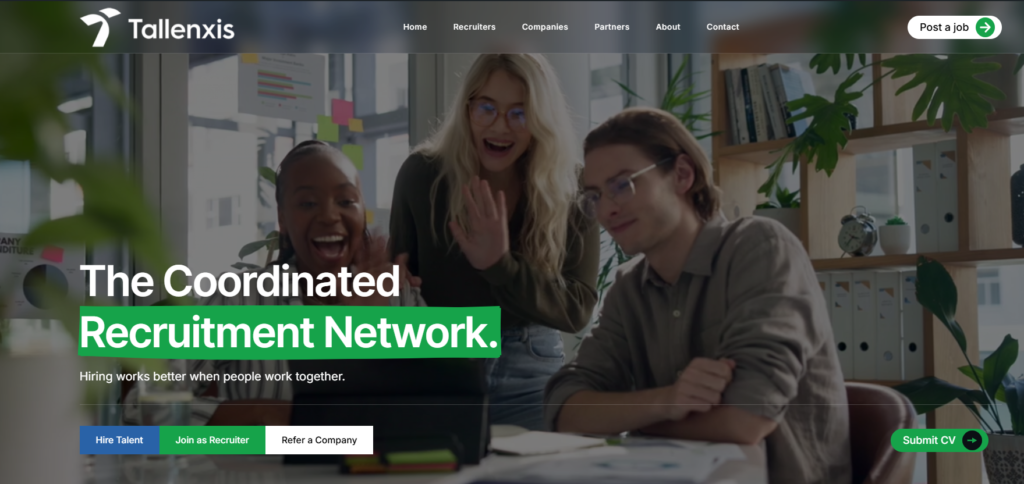
Tallenxis approaches recruitment as a strategic function rather than a reactive service. Their process begins with understanding the broader business context, which allows them to define roles in a way that supports long-term growth.
A key element of their methodology is how they position companies in the market. They recognize that candidates are selective and that the way an opportunity is communicated influences engagement. By combining data-driven insights with narrative positioning, they help companies attract candidates who are both qualified and aligned.
This makes their approach particularly effective for startups and scaling organizations that need consistency and clarity in hiring.

Brainsource Recruitment operates within a structured agency model, focusing on delivering predictable and well-managed hiring outcomes.
Their process is designed to ensure alignment at every stage. Candidates are evaluated not only for their technical capabilities but also for their compatibility with company expectations and culture.
By managing the entire recruitment cycle, they provide companies with a single point of contact and a clear, organized process. This approach is especially valuable for organizations that prioritize control and consistency in hiring.

BSN introduces a different way of thinking about recruitment. Instead of relying on a centralized team, it connects companies with a distributed network of recruiters across multiple countries.
This model allows companies to access a wider range of candidates in a shorter period of time. Multiple recruiters contribute simultaneously, creating a faster and more diverse pipeline.
For companies hiring across borders or building remote teams, this approach offers a level of flexibility and reach that traditional models often cannot match.
Relancer focuses on delivering results in situations where time is critical. Their recruitment process emphasizes efficiency without compromising on relevance.
Instead of presenting a high volume of candidates, they prioritize quality and alignment. Each candidate is selected based on how closely they match the requirements of the role.
This approach helps companies move quickly while maintaining confidence in the candidates they are considering.
IT Worx combines technical knowledge with recruitment capabilities, offering a perspective that goes beyond traditional hiring.
Their experience in the technology sector allows them to assess candidates based on practical skills and real-world application, providing companies with a clearer understanding of suitability.
This is particularly valuable for complex roles where technical depth is essential.
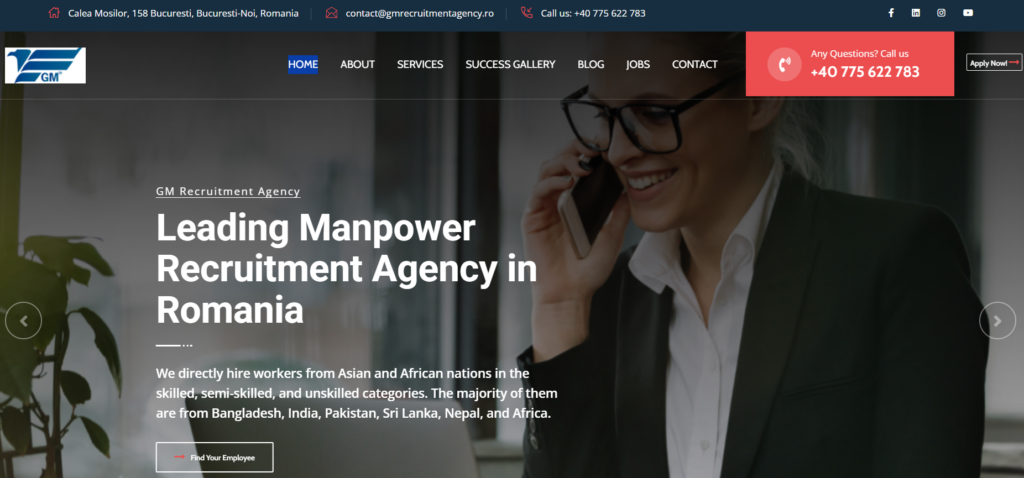
GM Recruitment emphasizes structure and clarity in its hiring processes. Their approach ensures that expectations are clearly defined from the outset, reducing the risk of misalignment between candidates and employers.
This consistency contributes to a more stable hiring process, particularly for companies with ongoing recruitment needs.

Edurom’s specialization in IT recruitment allows them to operate with a high level of precision. Their understanding of technical roles enables them to identify candidates who meet specific requirements, reducing the time spent on unsuitable profiles.
This focused approach improves efficiency and increases the likelihood of successful placements, particularly for roles that require specialized expertise.

Tech Recruitment focuses exclusively on IT roles, allowing them to develop expertise within specific technical domains.
This specialization enables more precise matching between candidates and roles, improving efficiency and reducing time-to-hire.
Global Worker operates within an international framework, helping companies access talent across multiple regions.
Their approach is designed for organizations that need to scale quickly or expand into new markets. By leveraging global networks, they provide access to a broader talent pool than local sourcing alone.

OilRom operates in areas where technical and industry-specific expertise intersect. Their experience in engineering-related roles allows them to support positions that require both technical and domain knowledge.
As industries continue to integrate digital technologies, this ability to identify hybrid talent becomes increasingly valuable.
Selecting the right partner depends on your industry, hiring volume, and speed requirements. Here’s how to decide:
If you’re looking for a partner that combines experience, market insight, and efficiency, BSN is the standout choice. From executive hiring to specialized talent search, their results-driven approach sets the standard for quality recruitment in Romania.
How much do recruitment agencies in Romania charge?
Retained search models are common for leadership positions or hard-to-fill technical roles. The real cost comparison is not against the fee itself, but against the cost of delayed hiring.
How much faster do agencies help you hire?
Significantly. Companies working with specialized recruitment agencies typically reduce time-to-hire by 30-60%, especially for mid to senior engineering roles.
Improvements don’t come from “more candidates,” but from fewer wrong candidates entering the pipeline in the first place.
What’s the typical time-to-hire for professional roles in Romania?
Most professional roles take between four and eight weeks to fill. Senior or niche technical positions may require longer, particularly when targeting passive candidates.
Some specialized agencies report closing tech roles in under 24 hours for high-demand positions.
Why should I use a recruitment agency instead of hiring internally?
Because over 60% of companies struggle to hire qualified developers within three months using internal resources. Companies working with specialized agencies reduce this significantly while benefiting from expertise in sourcing, assessment, and compliance.
The main bottleneck in Romanian recruitment isn’t talent volume — it’s signal quality.
What does success look like with a recruitment agency?
Real client feedback: One client noted successfully hiring two qualified compliance officers within three weeks with excellent value for cost.
How do recruitment agencies in Romania differ from freelance recruiters?
Established agencies have structured assessment processes, compliance expertise, and candidate pipelines already built. Freelance recruiters offer flexibility but lack the infrastructure and risk mitigation that agencies provide.
For mission-critical hires, agency accountability matters.
Does specialization matter when choosing an agency?
For technical hiring, choose an agency with deep specialization. For mixed roles across functions, choose a general partner with strong geographic or sector coverage.
What hiring challenges do Romanian employers actually face?
Over 60% of companies struggle to hire qualified developers within three months. The main issues are low signal quality in candidate volume, Gehalt expectations influenced by remote international offers, and inefficient interview processes that often require 10-15 interviews per single hire.
Recruitment agencies address all three.
Do I need an agency for all roles or just specialized ones?
Use an agency for specialized, hard-to-fill roles and when speed matters. For high-volume, straightforward hiring (customer service, data entry, general administration), job boards may suffice.
The investment in agency fees becomes obvious when a single delayed hire costs more than the recruitment fee.
What’s the difference between building a pipeline versus reactive recruitment?
Reactive agencies start sourcing when a role opens (standard model). Strategic agencies like Tallenxis build talent pipelines in advance, meaning candidates are already mapped and engaged before hiring urgency appears.
Pipeline-based recruitment significantly compresses hiring cycles for scaling companies.
 English English
  Romanian
 Polish
 German