
In the early 2000s, Romania’s focus was on attracting foreign investment. A decade later, conversations shifted towards digitalisation, outsourcing and the rise of the country’s technology sector. Today, headlines are dominated by artificial intelligence, automation and the future of work. Yet beneath these global conversations lies a very different reality. Romania’s economy is not slowing […]
In the early 2000s, Romania’s focus was on attracting foreign investment. A decade later, conversations shifted towards digitalisation, outsourcing and the rise of the country’s technology sector. Today, headlines are dominated by artificial intelligence, automation and the future of work.
Yet beneath these global conversations lies a very different reality.
Romania’s economy is not slowing because it lacks innovation. It is slowing because it cannot consistently find the people who build roads, transport goods, stock warehouses, prepare meals, operate machinery and keep businesses running every single day.
The country’s labour market is revealing a paradox. Thousands of companies are investing, expanding and creating new jobs, yet many of those positions remain vacant for months. The challenge is no longer generating employment opportunities. The challenge is finding enough people to fill them.
To better understand this imbalance, Intesiv Data Intelligence analysed 8,426 active job advertisements representing 33,737 open positions across 3,714 employers. The analysis is based on vacancy information publicly reported by employers through the National Agency for Employment (ANOFM – Agenția Națională pentru Ocuparea Forței de Muncă) and enriched through Intesiv’s proprietary market intelligence methodology.
The findings reveal a labour market under increasing operational pressure, one that tells a story very different from the one dominating public debate.
If there is one statistic that defines Romania’s labour market in 2026, it is this:
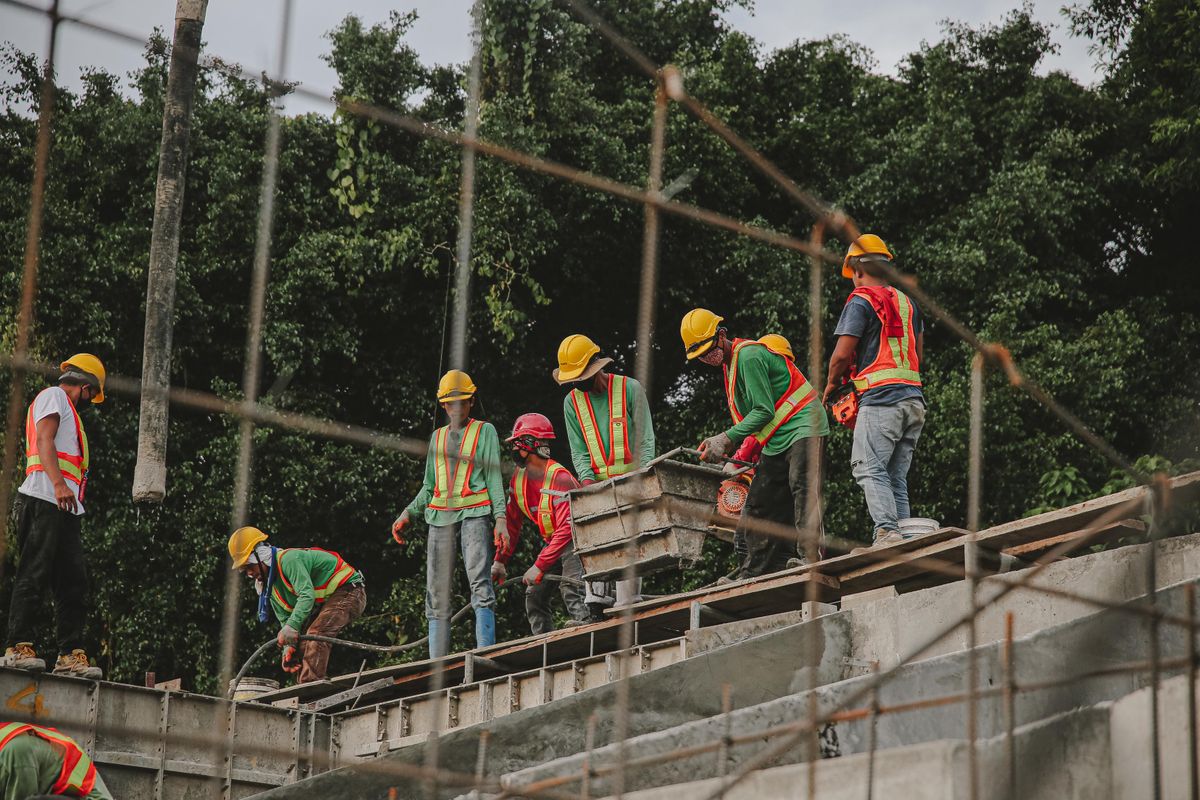
Construction and installation activities account for 8,933 open positions, representing more than one quarter of every vacancy identified in the dataset.
No other industry comes close.
This is more than a recruitment trend. It is a reflection of Romania’s economic transformation. Infrastructure investments, residential developments, industrial facilities and public works continue to expand across the country, fuelled by European funding, private investment and increasing demand for modern logistics infrastructure.
Every new warehouse, motorway section, residential neighbourhood and manufacturing facility begins with people on the ground. Engineers may design projects and investors may finance them, but construction workers transform plans into reality.
The difficulty is that these workers are becoming increasingly difficult to find.
A vacancy on a construction site does not remain confined to the human resources department. It delays project milestones, extends delivery schedules, increases subcontracting costs and places additional pressure on existing teams. As vacancies accumulate, operational efficiency declines and project profitability comes under strain.
The numbers suggest that Romania is not experiencing a slowdown in construction activity. Instead, it is experiencing a shortage of the workforce required to sustain that activity.
Construction may dominate the statistics, but another challenge is quietly reshaping the economy.
Transport, courier services, production and logistics collectively account for 7,327 open positions, making supply chain occupations one of the largest sources of unmet labour demand in Romania.
Behind every online purchase, supermarket shelf and manufacturing operation lies an interconnected chain of drivers, warehouse operators, freight handlers and logistics professionals. When even one part of that chain is understaffed, the consequences ripple across the wider economy.
The most demanded occupation identified in the analysis is Heavy Goods Vehicle (HGV) Driver, with 1,995 open positions. Close behind are unskilled construction workers, freight handlers, retail workers and couriers.
These occupations rarely dominate public discussion about the future of work. Yet without them, factories cannot move products, retailers cannot replenish inventory and exporters cannot meet delivery schedules.
The Romanian economy increasingly depends on occupations that often receive the least public attention.
Also read: 7 Best Accounting Recruitment Agencies in Romania (2026)
Seasonality has always shaped employment in hospitality, but the latest data suggests that recruitment pressure is becoming more intense.
Restaurants alone account for 2,524 open positions, reflecting one of the largest seasonal hiring waves in recent years.
As tourism activity accelerates during the summer months, restaurants, hotels and leisure businesses compete simultaneously for chefs, kitchen assistants, waiters and support staff. The challenge is compounded by competition from other sectors seeking workers with similar educational backgrounds and experience levels.
For many employers, recruitment has become a race against time. Every unfilled position represents fewer available tables, longer waiting times and reduced revenue during the busiest period of the year.
The issue is no longer whether businesses can create jobs. The issue is whether enough workers remain available to accept them.
One of the most surprising findings from the analysis directly challenges one of the most common assumptions about today’s labour market.
Much of the public discussion suggests that employers cannot recruit because candidates lack specialised skills.
The data tells a different story.
More than 12,800 positions, 38.1% of the entire market require no previous work experience whatsoever. When vacancies requiring fewer than three years of experience are included, the figure rises to 80.8% of all advertised positions.
This changes the conversation entirely.
Romania is not primarily searching for highly specialised professionals. It is searching for people willing to enter the workforce quickly and perform essential operational roles.
Competition therefore revolves less around qualifications and more around availability.
Employers are no longer competing only within their own industries. Construction companies, logistics providers, retailers and restaurants are increasingly recruiting from the same labour pool. Success depends less on identifying candidates and more on reaching them before someone else does.
Also read: The Top 5 Most In-Demand Jobs in Romania and What They Reveal About the Economy
Perhaps the most concerning finding is not how many vacancies exist, but how long they remain open.
The analysis shows that 29.67% of all positions, approximately 10,000 jobs, have remained vacant for more than sixty days.
A vacancy that remains open for weeks is inconvenient.
A vacancy that remains open for months becomes an operational constraint.
Construction projects progress more slowly. Distribution networks operate below capacity. Existing employees work additional hours to compensate for missing colleagues. Productivity declines while labour costs increase.
These hidden costs rarely appear in recruitment statistics, yet they influence business performance every day.
Viewed through this lens, Romania’s labour shortage is no longer simply an employment issue. It has become an economic efficiency issue.
For decades, recruitment followed a familiar formula. Employers advertised vacancies, candidates applied and hiring decisions followed.
That model assumed a relatively balanced labour market.
Today’s market looks very different.
Thousands of employers are searching for remarkably similar profiles at exactly the same time. Drivers, warehouse workers, construction labourers and hospitality staff are no longer choosing between unemployment and employment. They are choosing between multiple employers competing simultaneously for their attention.
This shift fundamentally changes recruitment strategy.
Success increasingly depends on speed, candidate reach and market intelligence rather than advertising volume alone. Organisations capable of identifying available workers early and reducing hiring friction are likely to outperform competitors relying solely on conventional recruitment channels.
The competition for talent has evolved into a competition for responsiveness.
Romania’s labour market offers an important reminder that economic realities are often less glamorous than public narratives.
While artificial intelligence and digital transformation will undoubtedly shape the future, today’s economy continues to depend on people performing essential physical work.
Roads cannot be built by algorithms.
Goods cannot be delivered through software alone.
Restaurants cannot serve customers without people.
Factories cannot increase production without operators.
The country’s greatest workforce challenge therefore lies not at the frontier of emerging technologies, but in maintaining the operational workforce that enables every other part of the economy to function.
Understanding this distinction is essential for employers, policymakers and investors alike.
The organisations that recognise this changing reality—and adapt their recruitment strategies accordingly—will be better positioned to grow in an increasingly competitive labour market.