
Romania’s entry-level job market in 2026 reflects a structural transformation driven by expansion hiring, industrial scaling, and labor migration patterns.
Romania’s entry-level job market in 2026 is defined by a structural imbalance that fundamentally reshapes how labor demand is distributed across the economy. Instead of being an environment where experience accumulates gradually over time, Romania is now operating in a system where a majority of job creation is concentrated at the entry level.
Across the analyzed labor dataset, more than 70% of all job postings require minimal professional experience. Within this structure, 3,400 positions require fewer than three years of experience, while 2,588 roles explicitly require zero experience. This creates a labor market where entry-level accessibility is not a niche characteristic but a dominant structural feature.
This pattern is not isolated. It aligns with vacancy distributions published through Romanian National Employment Agency (ANOFM), where annual vacancy reports consistently show strong concentrations of low-experience roles across logistics, manufacturing, retail, and services . These reports provide a consistent signal: Romania’s labor demand is structurally weighted toward operational and junior roles rather than mid-career specialization.
To understand why this happens, it is necessary to separate two forces shaping Romania’s labor market simultaneously. The first is expansion-driven job creation, where 26,303 of 37,181 total vacancies represent new roles rather than replacements. The second is workforce structure imbalance, where mid-level professionals are increasingly scarce due to migration toward higher wage EU labor markets.
Eurostat labor force methodology defines employment structures through participation, unemployment, and job vacancy composition, emphasizing how expansion cycles influence labor distribution rather than simply job counts . Romania currently exhibits characteristics of a transitional expansion economy, where new job creation exceeds the rate at which experienced labor supply can replenish itself.
This creates a structural dependency on entry-level hiring.

Entry-level dominance in Romania is not simply a hiring preference but a systemic outcome of labor market evolution. In mature economies, entry-level roles typically form a smaller proportion of total vacancies because workforce structures are stabilized and mid-level professionals dominate labor supply. In Romania, however, multiple structural pressures converge to create the opposite outcome.
The first pressure is expansion hiring. When 70.7% of job openings are newly created roles rather than replacement positions, employers are not filling gaps left by departing employees. They are building new operational capacity. Expansion hiring inherently requires scalable workforce entry points, which are most efficiently filled through entry-level recruitment.
The second pressure is migration-driven talent loss. European Employment Services (EURES) labour mobility data consistently highlights Eastern Europe as a net exporter of skilled labor toward Western European markets . This reduces the available pool of mid-career professionals inside Romania, creating structural gaps in the 3–10 year experience segment.
The third pressure is industrial structure. Romania’s economy is heavily weighted toward logistics, manufacturing, shared services, and operational support systems. These sectors inherently require large volumes of entry-level labor due to their process-driven nature.
When these three pressures combine, the result is predictable. Entry-level hiring becomes the dominant labor absorption mechanism.
Also read: Courier Jobs in Romania May 2026: What 2,981 Romanian Roles Reveal About Last-Mile Labor Demand
The logistics sector represents the most significant driver of entry-level hiring in Romania. This is not due to short-term demand fluctuations but due to structural positioning within European supply chains.
Romania has increasingly become a logistics and distribution corridor connecting Central and Eastern Europe. This shift has been driven by nearshoring strategies, e-commerce expansion, and infrastructure investment cycles. Each of these forces generates operational labor demand that is inherently entry-level in structure.
ANOFM occupational vacancy classifications consistently show logistics, transport, and warehousing roles among the highest-volume categories of job postings . These include warehouse operators, freight handlers, transport assistants, and distribution coordinators.
The key structural characteristic of logistics employment is scalability. Each expansion in warehouse infrastructure or transport capacity requires replication of standardized roles. This makes logistics one of the most predictable sources of entry-level hiring demand in Romania.
Unlike knowledge-based industries, logistics does not scale through specialization. It scales through replication. This creates sustained demand for entry-level workers who can be trained quickly and deployed at scale.
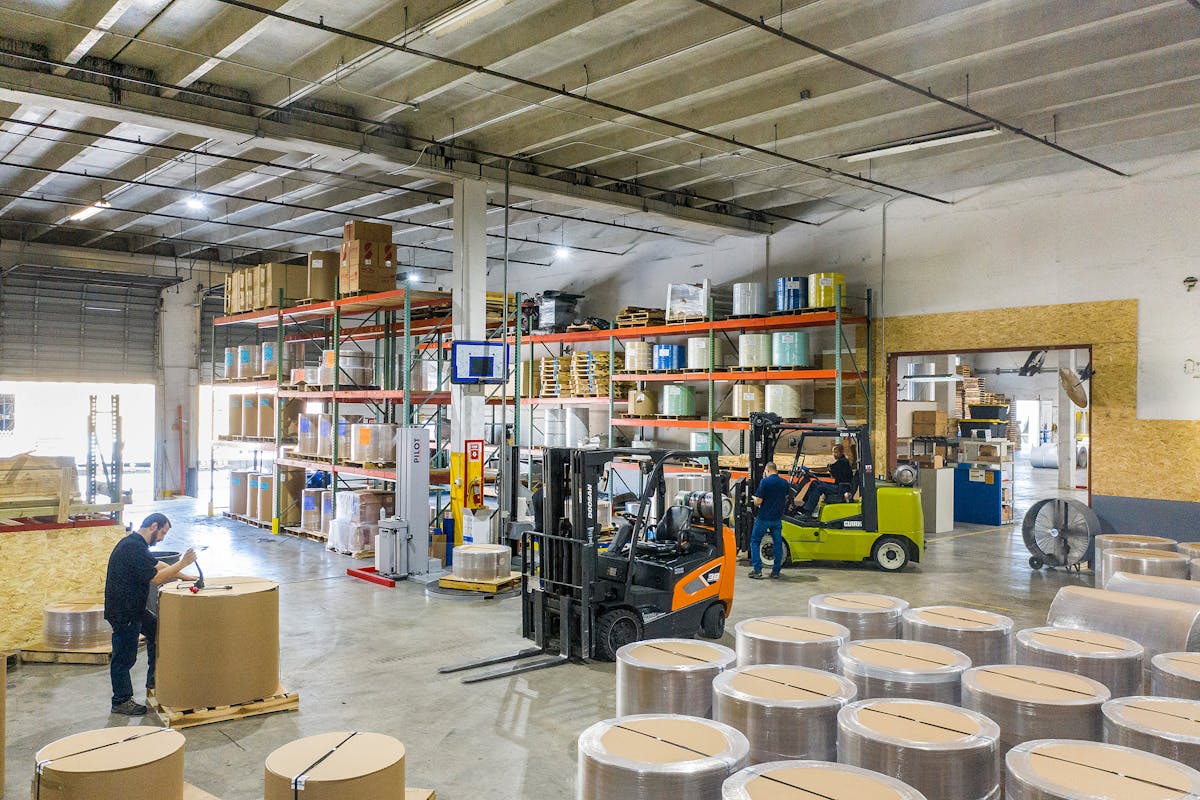
Manufacturing represents another major pillar of Romania’s entry-level job market. However, unlike logistics, manufacturing combines entry-level operational demand with higher-skilled engineering requirements.
Romania’s manufacturing sector is heavily integrated into European supply chains, particularly in automotive, electronics, and machinery production. These industries rely on layered workforce structures where a small number of engineers and technicians oversee a large base of operational staff.
Eurostat industrial employment data shows that Eastern European manufacturing systems tend to maintain higher proportions of operational labor compared to Western Europe, where automation reduces entry-level dependency .
In Romania, this translates into continuous demand for production operators, assembly workers, and quality control assistants. These roles typically require minimal prior experience but are essential to production continuity.
Manufacturing therefore functions as a structured entry-level absorption system embedded within capital-intensive industrial expansion.
Shared services represent one of the most important but often underestimated drivers of entry-level hiring in Romania.
This sector includes customer support centers, HR administration, finance processing, procurement assistance, and back-office operations. These roles are frequently designed as entry-level positions because they function as onboarding points into multinational corporate structures.
Romania has become a major shared services hub due to cost efficiency, multilingual talent availability, and EU regulatory alignment. As multinational companies expand operations in Romania, they establish large administrative centers that require continuous entry-level intake.
Unlike manufacturing, shared services scaling is not constrained by physical infrastructure. It is driven by organizational expansion. This means entry-level hiring in this sector is directly proportional to corporate growth rather than production capacity.
While technology is often associated with senior expertise, Romania’s labor market shows significant entry-level absorption within IT services.
These include junior developers, QA testers, IT support specialists, and data assistants. These roles exist not as replacements for senior engineers but as structured entry points into technical career pipelines.
The reason for this structure is supply constraint. Experienced engineers are limited due to global competition, meaning companies must build internal talent pipelines starting from entry-level recruitment.
This creates a system where entry-level hiring is not transitional but foundational to long-term workforce development.
The most important conclusion from Romania’s entry-level job structure is that the economy is no longer primarily a labor recycling system. It is a workforce development system.
Jobs are not being created to replace existing employees. They are being created to expand economic capacity.
This is why entry-level hiring dominates. It is the only scalable input available for a rapidly expanding labor market.
Romania’s entry-level job market in 2026 reflects a structural transformation driven by expansion hiring, industrial scaling, and labor migration patterns. With over 70% of roles requiring minimal experience, Romania is effectively operating as a workforce development economy where entry-level talent forms the foundation of economic growth.